Alright, guys, I'm out of here for a couple of weeks. Gettin' hitched and then away on honeymoon.
While I'm gone, make sure to check out my brief write-ups for Nos Populus, and all the excerpts, too. If you like those, you may also enjoy the story of my self-publishing experience. And, if you still want more for whatever reason, well, you might as well go order your copy of Nos Populus.
I know I've been heavy on sports lately. That's mostly because I find sports relatively easy to cover at a time when I've had too much on my plate as is. Plus, the campaigns have (probably deliberately) been keeping quiet during this pre-convention phase and there'll be plenty of time to cover the election over the next 22 weeks or so (yes, really). And as the summer rolls along, there'll be more book and movie reviews, as well (eight weeks until The Dark Knight Rises!). And plenty more besides; inspiration is never a problem--time is.
So until next month: take it easy. Don't do anything I wouldn't do. Or, you know, do. I'm not your boss.
Thursday, May 24, 2012

Tuesday, May 22, 2012
Kerry Wood
**Yes, I know this is a few days late. Shut up.**
Kerry Wood retired last week after getting one more strike out (for an even 1,582 on his career) in a losing effort to the White Sox. I've sometimes been rough on Wood since he returned to the Cubs from his brief sojourn to Cleveland and New York. But even when he was cradling an 8.34 ERA and blowing easy saves, part of me knew this was the natural result of another formerly brilliant young pitcher whose form was never properly adjusted to preempt injury because pitching coaches (like Larry Rothschild) never like to fix what doesn't appear to be broken. Until it is.
He and Mark Prior were the collateral damage of the 2003 NLCS. Both had phenomenal arms and near-limitless potential, but too much pressure on increasingly strained shoulders did them in. I've always thought that Prior had it worse in many ways--the man on the mound for The Bartman Game endured the baseball version of PTSD (Wood started the more fateful but easily-overlooked Game 7 of that series). This was in addition to the physical injuries that kept Prior sidelined for chunks of the next couple years before being signing a one-year deal with his hometown San Diego Padres, who eventually opted to resign him to their minor league squad. He's bouncing around the minors even today. At least Wood was able to remain a big leaguer to the end.
But Prior was never "Kid K," the 20-year old who, in his fifth big league start, struck out twenty batters in a single game, tying Roger Clemens' record and becoming a force during the Cubs' 1998 Wild Card season. He was not the fastest ever pitcher to reach 1,000 strikeouts and he does not hold the second highest mark for strike outs per inning, as Wood was and does. Wood stuck around through the rougher years around the turn of the millennium and came back from Tommy John surgery to throw a 12-6, 3.36 ERA season in 2001. He didn't miss a single start the following year and then went 14-11 with a 3.20 and a couple of Divisional Series wins in the inauspicious 2003 season. And, like Prior, that's when things started going bad, with injuries mounting and expectations for the whole team achieving that strange kind Chicago Cubs brand of schizophrenia, weighing everyone down. He had taken on the reliever role for the twin train wrecks of 2007 and 2008 and by the next year, he had been shuffled away, along with so many following the official century mark of the Cubs' title drought. In 2011 he turned down other offers to return to the "family." And though he was never going to be what he once was, we were happy to have him and were sad when he showed significant age at 34 and 35, in a position that regularly showcases 40-somethings.
That's mostly because, for a franchise that twice traded the best pitcher of the last fifty years, Wood was all we could have dared dream. More importantly, he was a Cub through and through and not just because he said so. He shined so brightly so young, personifying the fabled eternal hopes of the Cubs Fan, making our old and badly aged franchise feel as young as he was. He took the mound in times of plenty and times of poverty, each time reminding us of those early days when everything was possible and we really had a future. And though he left briefly, it was not his choice and when he did, it was because he found it impossible to know home anywhere else (it's modern baseball poetry that negotiations for his resigning began the day of Ron Santo's funeral). And like our hopes, year after year, he broke down and flamed out earlier than he deserved.
So long, Kerry. And thanks.
Kerry Wood retired last week after getting one more strike out (for an even 1,582 on his career) in a losing effort to the White Sox. I've sometimes been rough on Wood since he returned to the Cubs from his brief sojourn to Cleveland and New York. But even when he was cradling an 8.34 ERA and blowing easy saves, part of me knew this was the natural result of another formerly brilliant young pitcher whose form was never properly adjusted to preempt injury because pitching coaches (like Larry Rothschild) never like to fix what doesn't appear to be broken. Until it is.
He and Mark Prior were the collateral damage of the 2003 NLCS. Both had phenomenal arms and near-limitless potential, but too much pressure on increasingly strained shoulders did them in. I've always thought that Prior had it worse in many ways--the man on the mound for The Bartman Game endured the baseball version of PTSD (Wood started the more fateful but easily-overlooked Game 7 of that series). This was in addition to the physical injuries that kept Prior sidelined for chunks of the next couple years before being signing a one-year deal with his hometown San Diego Padres, who eventually opted to resign him to their minor league squad. He's bouncing around the minors even today. At least Wood was able to remain a big leaguer to the end.
But Prior was never "Kid K," the 20-year old who, in his fifth big league start, struck out twenty batters in a single game, tying Roger Clemens' record and becoming a force during the Cubs' 1998 Wild Card season. He was not the fastest ever pitcher to reach 1,000 strikeouts and he does not hold the second highest mark for strike outs per inning, as Wood was and does. Wood stuck around through the rougher years around the turn of the millennium and came back from Tommy John surgery to throw a 12-6, 3.36 ERA season in 2001. He didn't miss a single start the following year and then went 14-11 with a 3.20 and a couple of Divisional Series wins in the inauspicious 2003 season. And, like Prior, that's when things started going bad, with injuries mounting and expectations for the whole team achieving that strange kind Chicago Cubs brand of schizophrenia, weighing everyone down. He had taken on the reliever role for the twin train wrecks of 2007 and 2008 and by the next year, he had been shuffled away, along with so many following the official century mark of the Cubs' title drought. In 2011 he turned down other offers to return to the "family." And though he was never going to be what he once was, we were happy to have him and were sad when he showed significant age at 34 and 35, in a position that regularly showcases 40-somethings.
That's mostly because, for a franchise that twice traded the best pitcher of the last fifty years, Wood was all we could have dared dream. More importantly, he was a Cub through and through and not just because he said so. He shined so brightly so young, personifying the fabled eternal hopes of the Cubs Fan, making our old and badly aged franchise feel as young as he was. He took the mound in times of plenty and times of poverty, each time reminding us of those early days when everything was possible and we really had a future. And though he left briefly, it was not his choice and when he did, it was because he found it impossible to know home anywhere else (it's modern baseball poetry that negotiations for his resigning began the day of Ron Santo's funeral). And like our hopes, year after year, he broke down and flamed out earlier than he deserved.
So long, Kerry. And thanks.
Friday, May 18, 2012
A Lesson From Sweden
That's what I wanted to say to him, anyway. Only thought of it later, after being so taken aback that I could only mutter something like "No. Gotta go. Bye." I still regret not having the better retort on hand. The French have a phrase for that situation--it literally translates as "the wit of the staircase." But this isn't about the French--it's about the Swedes.
That there's a recruitment ad for the Swedish Armed Forces. Here's another one along the same lines. This series of ads has won some awards and been mildly popular in some corners of the Internet. If you're an American, however (and most of you reading this are), you're probably wondering, "How could they say that about their own military? And where's the super soldier science fictiony heroics? Where's the lava monster?"
Ah, that's better. Was starting to feel disoriented with all that down to Earth, relateable stuff about acquiring real world skills for real world jobs. Thank you, lava monster. And thank you, Kid Rock and 3 Doors Down for over-achieving on your usual manipulative pablum with those ads that play before movies, which are likely their own overlong, overblown, unrealistic ads for military service. Or, in an admittedly ingenious ploy, an overlong but more realistic ad for military service. Between them, Michael Bay and Roland Emmerich have melted our collective, what do you call them? Brain bones. It's hard for us to get stimulated by anything less than adrenaline-fueled, patriotism-exploiting action shots, with lots of quick-cutting to distract us from how bad the CGI (CGI!) is. So when the military constantly needs fresh blood (literally), it has to resort to some really stupid gimmicks, just like any other organization.
Yes, the world of advertising is anything but subtle and accurate. But shouldn't we expect something better out of our armed forces? You know, something that appropriately captures the things we make them do for us and doesn't mythologize them into something that makes us think they're always there, ready to bomb whomever we need in order to advance our short-term political interest? Or is this the price we pay for living in an era of war and mass communication in a post-draft society?
As a final comparison, look at this ad for the British Royal Marines:
It's not much less subtle than our ads, but you can taste the tonal difference, can't you? This is not glamorous, it is not fantastical, it is not romantic. It doesn't make promises. It tells you up front that you will not be able to do this, don't bother applying, we don't even want you. The only people still standing are those who can do this (or think they can) and they will push themselves for their country. Those of us left behind are legitimately impressed and appreciative of the tools we have in them. "Let's make sure we don't waste these tools on any vanity wars," we say. "You know, unless our mates in America insist we should."
Wednesday, May 16, 2012
In Brief: Ever So Simple
Rich Cohen of The Wall Street Jornal has finally figured out the secret behind the Cubs' century of woe. Turns out it was Wrigley Field. Oh, is that all it was? And to think we thought it was an ownership that was alternately disinterested and incompetent (and at one time likely so racist that it took someone of Ernie Banks' talent to get them to sign a black player). Or the disproportionate amount of day games played in Midwestern summers. Or fans and players and ownership alike putting too much emphasis on legendary curses, turning them into self-fulfilling prophesies. What fools we've been and what a relief it is. It's this simple: all we need to do is dynamite Wrigley--the institution that's basically insured the Cubs' status as the third or fourth largest market in baseball during a lengthy winning-drought--and fans will stop going purely for fun and instead go to see the winner that isn't there and hasn't been in over one-hundred years.
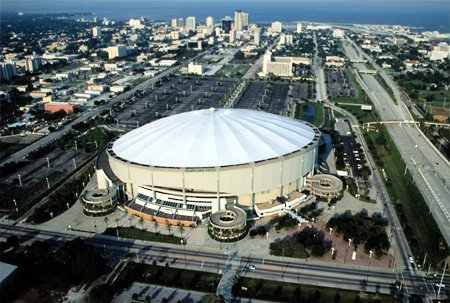
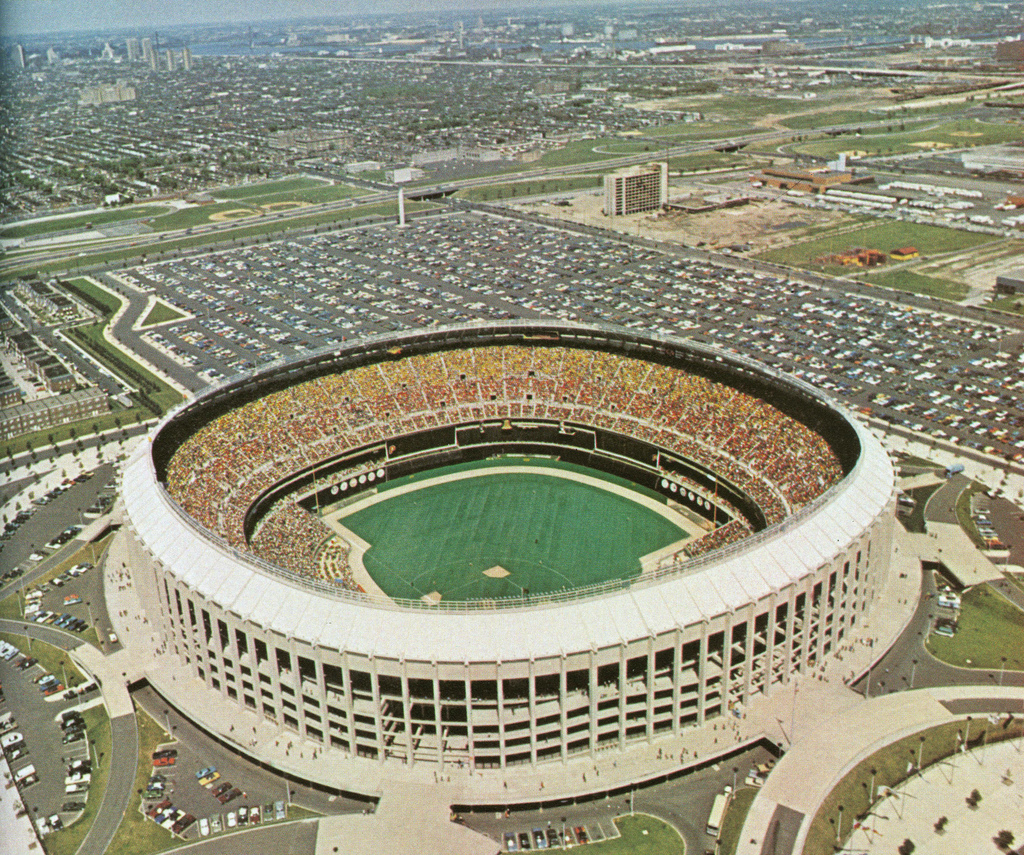
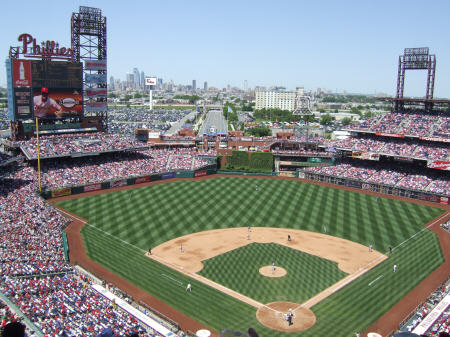
Seems that Cohen, formerly of Chicago, has taken up in New York, where Yankee Stadium has shown him the light. All baseball teams need are bland, soulless stadiums and then trophies will rain down upon them like the shards of glass from The Natural: electrocuting us and slicing our eyes open and blinding us with their terrible beauty. It's the same reason the Rays have won every World Series since their birth in 1998 with the power of their ugly monstrosity. And why the Phillies have been so lousy since moving out of their old, non-loserly eyesore and into that distastefully attractive Xanadu of a stadium. Why do you think the World Series trophy is the ugliest of the four major sports? Because baseball excels at ugliness above all, you morons.
It doesn't make any sense for thecontrollers of the means of production
job creators to build a winner when the fans are only paying for the pretty
stadium. You can only have one or the other. It's really all the fans fault, those cheap-thrill yokels. What the hell's wrong with you, you sons of bitches? Don't you know that ivy on the walls is the first step toward welfare queen-ism?
If the Cubs and their fans stop choosing to be losers, they'll stop being losers. Bootstraps, America, Oorah. Jesus, how could we have been so stupid and myopic and irritating and undeserving of an article on major national newspaper's website?
Seems that Cohen, formerly of Chicago, has taken up in New York, where Yankee Stadium has shown him the light. All baseball teams need are bland, soulless stadiums and then trophies will rain down upon them like the shards of glass from The Natural: electrocuting us and slicing our eyes open and blinding us with their terrible beauty. It's the same reason the Rays have won every World Series since their birth in 1998 with the power of their ugly monstrosity. And why the Phillies have been so lousy since moving out of their old, non-loserly eyesore and into that distastefully attractive Xanadu of a stadium. Why do you think the World Series trophy is the ugliest of the four major sports? Because baseball excels at ugliness above all, you morons.






It doesn't make any sense for the
If the Cubs and their fans stop choosing to be losers, they'll stop being losers. Bootstraps, America, Oorah. Jesus, how could we have been so stupid and myopic and irritating and undeserving of an article on major national newspaper's website?
Monday, May 14, 2012
The Inherent Illogic of Sports Fandom
The Cubs' season being what it has been thus far (awful, if improving maybe, but probably not) I've had cause to recall this Economist article from last July. And for the same reasons that I was able to recall a short blog post from ten months ago, I cannot let it pass now. This is not just for Cubs fans, but for any sports fan who has ever felt anything for a team. Look how far this guy misses the mark:
An aside: as you may have surmised, I am a Cubs fan. This is largely because my father was a Cubs fan. And his father was a Cubs fan before him. My early adolescence coincided with the 1998 season and the Sosa-McGwire home run race (whatever the numbers say and whatever shit has come to light and whatever my current feelings regarding Sosa, his name will always come before McGwire's) and the Cubs winning the N.L. Wild Card. The Cubs hit their high-water mark of the post-1945 era during my late teens. I was sixteen going on seventeen when The Bartman Game happened (an aside within the aside: ESPN Films' documentary Catching Hell is well worth your time if you're into the Cubs, or the topic of the overzealousness of sports fans). By the time I left home--and for all intents and purposes long before--my fandom was signed in blood. I never had a say in who I ended up cheering for, or at least no time to ponder it before it sunk in irretrievably.
And I've had the chance to switch loyalties. I had just moved to Washington when Major League Baseball announced that the old Montreal Expos would be coming. And while the decision to become a Nationals fan might look pretty good right about now, it was never realistically going to happen. To have been here a few short months and have already assimilated that much and, implicitly, shunning my former beliefs? Just a year After Bartman? Any sports fan worth their memorabilia understands that there was never any conflict there. Because, at the risk of invoking an overplayed meme, one does not simply choose a sports allegiance.
I could've become a Red Sox fan and helped mankind achieve new heights in the field of obnoxiousness. I could've become a Phillies fan and learned how to hate life and myself, regardless how well the team does. I could've become a Yankees fan and never had to worry about thinking or feeling anything ever. I could've become a Rays fan or an Indians fan and ceased to exist. But this all assumes that there is ever a point at which a sports fan sits down and consciously decides what team to root for. This happens on occasion but it never sticks in any case that I've ever seen. And why should it? Without the revelatory moment of "I love this team" the interest withers as soon as the moment stops being exciting.
We're talking about cheering on millionaires with overactive pituitary glands chasing a ball around a meticulously landscaped field in large and ostentatious (and often taxpayer-funded) stadiums. We wear clothing with the team logos and our favorite athlete's name and number on them, signaling us as part of the flock. We have traditions and superstitions that we follow when watching these events--events in which we the fans have no direct effect upon the outcome whatsoever. We refer to the domes and stadiums at which these events take place as "cathedrals" and "holy ground;" at the older ones, we talk about the ghosts of long gone athletes and coaches watching the action--perhaps even playing small roles of their own, when convenient for the narrative. In these places, logic and reason are checked at the gate along with outside food and beverages.
Comparing sports fandom to genuine religious faith isn't fair, but the concepts share similar seeds. Most are born into it, as I was; the faith handed down through the generations. Others are raised agnostic and only come into their faith later, following moments of great excitement that forever bonds a fan with her team. Some others will marry into a faith, either having abandoned a previous one--opening harsh wounds with old friends and family--or never having had any of their own. Still others will experience a tragic rift with their team, anything from decades of poor performance to scandal to a team leaving town and having to start anew; though, especially in the last example, the aggrieved will often not return to any faith, having been too heartbroken to trust again. The point is, no fan ever really feels as though they choose their fandom--those that seem to can most often thank happenstance and serendipity, rather than reasoned analysis of the options. And if you ask fans, they'll tell you they couldn't change their affiliation if they wanted to (and sometimes, even despite the fact that they might want to). How could they, when they've already found Truth?
That's not to say we're unquestioning. We question frequently. And we'll abide or ignore the sometimes awful things done by our teams and the members of it because the team is, or needs to be, above than the foibles of mere mortals. More often, we'll rage at our athletes and coaches and front offices when things aren't going well. We'll appeal to the names of the aforementioned ghosts of the stadium and demand that those spirit-legends be counseled on everything from personnel issues to jersey colors. We'll spew our rage for weeks on end, but unless we've done it for years, we rarely leave the church altogether. Even those that do still carry around acres of old wiring; the ex-fan--unable to ignore Mother Team thanks to the interference of friends and family who remain within the fold--ever peripherally aware of his former team's transactions and transgressions, outside trying not to look in.
Sometimes, we become overzealous and even ruthlessly violent. We'll hound players and our fellow fans if they have not properly rewarded our faith and do not satisfactorily atone; we'll run them out of town on a rail (yes, that's another plug for Catching Hell). After absorbing enough alcohol prior to the sixth inning cut-off, we may resemble the religious fundamentalists of our modern age, decrying the unbelievers and the infidels and lashing out at those who enter our temples. Sometimes we attempt to exclude them from profaning our sanctuaries entirely. If not for the fact that we actually need other teams to exist in order for our teams to have opponents, we could probably stoop to much worse.
The point is: There are forces involved in sports fandom that cannot be reckoned with metrics and formulas and statistics. The phenomenon exists in a realm beyond analysis. And nothing about it--in all its communal glory and corrupting groupthink--can or should be examined with a spreadsheet.
It would be like trying to explain an economist's compulsive need to categorize everything around him for the sake of another blog post.
No "real costs." Said the same way that only people who have never been in love say "better to have loved and lost..." And filled with the same detached half-understanding endemic to any behavioral economist, ignorant of--and apparently unconcerned with--the realities of sports fandom.To pick a team that is known to lose is technically to anticipate a loss, but in a manageable, predictable way. There is no real loss to avoid; a win would merely be an unexpected bonus. Backing a more successful team raises the stakes by making wins just as viable as losses, so losing is more of a loss.
Teams like the Cubs give people a safe space in which to lose. Fans get the benefits of commiseration without incurring any real costs.
An aside: as you may have surmised, I am a Cubs fan. This is largely because my father was a Cubs fan. And his father was a Cubs fan before him. My early adolescence coincided with the 1998 season and the Sosa-McGwire home run race (whatever the numbers say and whatever shit has come to light and whatever my current feelings regarding Sosa, his name will always come before McGwire's) and the Cubs winning the N.L. Wild Card. The Cubs hit their high-water mark of the post-1945 era during my late teens. I was sixteen going on seventeen when The Bartman Game happened (an aside within the aside: ESPN Films' documentary Catching Hell is well worth your time if you're into the Cubs, or the topic of the overzealousness of sports fans). By the time I left home--and for all intents and purposes long before--my fandom was signed in blood. I never had a say in who I ended up cheering for, or at least no time to ponder it before it sunk in irretrievably.
And I've had the chance to switch loyalties. I had just moved to Washington when Major League Baseball announced that the old Montreal Expos would be coming. And while the decision to become a Nationals fan might look pretty good right about now, it was never realistically going to happen. To have been here a few short months and have already assimilated that much and, implicitly, shunning my former beliefs? Just a year After Bartman? Any sports fan worth their memorabilia understands that there was never any conflict there. Because, at the risk of invoking an overplayed meme, one does not simply choose a sports allegiance.
I could've become a Red Sox fan and helped mankind achieve new heights in the field of obnoxiousness. I could've become a Phillies fan and learned how to hate life and myself, regardless how well the team does. I could've become a Yankees fan and never had to worry about thinking or feeling anything ever. I could've become a Rays fan or an Indians fan and ceased to exist. But this all assumes that there is ever a point at which a sports fan sits down and consciously decides what team to root for. This happens on occasion but it never sticks in any case that I've ever seen. And why should it? Without the revelatory moment of "I love this team" the interest withers as soon as the moment stops being exciting.
We're talking about cheering on millionaires with overactive pituitary glands chasing a ball around a meticulously landscaped field in large and ostentatious (and often taxpayer-funded) stadiums. We wear clothing with the team logos and our favorite athlete's name and number on them, signaling us as part of the flock. We have traditions and superstitions that we follow when watching these events--events in which we the fans have no direct effect upon the outcome whatsoever. We refer to the domes and stadiums at which these events take place as "cathedrals" and "holy ground;" at the older ones, we talk about the ghosts of long gone athletes and coaches watching the action--perhaps even playing small roles of their own, when convenient for the narrative. In these places, logic and reason are checked at the gate along with outside food and beverages.
Comparing sports fandom to genuine religious faith isn't fair, but the concepts share similar seeds. Most are born into it, as I was; the faith handed down through the generations. Others are raised agnostic and only come into their faith later, following moments of great excitement that forever bonds a fan with her team. Some others will marry into a faith, either having abandoned a previous one--opening harsh wounds with old friends and family--or never having had any of their own. Still others will experience a tragic rift with their team, anything from decades of poor performance to scandal to a team leaving town and having to start anew; though, especially in the last example, the aggrieved will often not return to any faith, having been too heartbroken to trust again. The point is, no fan ever really feels as though they choose their fandom--those that seem to can most often thank happenstance and serendipity, rather than reasoned analysis of the options. And if you ask fans, they'll tell you they couldn't change their affiliation if they wanted to (and sometimes, even despite the fact that they might want to). How could they, when they've already found Truth?
That's not to say we're unquestioning. We question frequently. And we'll abide or ignore the sometimes awful things done by our teams and the members of it because the team is, or needs to be, above than the foibles of mere mortals. More often, we'll rage at our athletes and coaches and front offices when things aren't going well. We'll appeal to the names of the aforementioned ghosts of the stadium and demand that those spirit-legends be counseled on everything from personnel issues to jersey colors. We'll spew our rage for weeks on end, but unless we've done it for years, we rarely leave the church altogether. Even those that do still carry around acres of old wiring; the ex-fan--unable to ignore Mother Team thanks to the interference of friends and family who remain within the fold--ever peripherally aware of his former team's transactions and transgressions, outside trying not to look in.
Sometimes, we become overzealous and even ruthlessly violent. We'll hound players and our fellow fans if they have not properly rewarded our faith and do not satisfactorily atone; we'll run them out of town on a rail (yes, that's another plug for Catching Hell). After absorbing enough alcohol prior to the sixth inning cut-off, we may resemble the religious fundamentalists of our modern age, decrying the unbelievers and the infidels and lashing out at those who enter our temples. Sometimes we attempt to exclude them from profaning our sanctuaries entirely. If not for the fact that we actually need other teams to exist in order for our teams to have opponents, we could probably stoop to much worse.
The point is: There are forces involved in sports fandom that cannot be reckoned with metrics and formulas and statistics. The phenomenon exists in a realm beyond analysis. And nothing about it--in all its communal glory and corrupting groupthink--can or should be examined with a spreadsheet.
It would be like trying to explain an economist's compulsive need to categorize everything around him for the sake of another blog post.
Subscribe to:
Posts (Atom)