A sub-heading on MSNBC's front page today read, in part, "With just five months until Election Day..." A few qualifiers in there, but the headline isn't the point. Nor is the First Read post to which it links (I'll note that the body of the FR post changes the line to "With less than five months until Election Day..."). It's the wording. "Just" five months to go; "less than five" months to go. Like it's right around the bloody corner. And as though the conventions themselves--once the beginning of the campaign proper, in a more halcyon era--didn't begin for another ten and a half weeks. You know what five months is? It's the better share of a human pregnancy. It's a little longer than a typical college semester. It's about a third as long as the NBA playoffs.
That FR post, by the way, uses its own basketball analogy--talking about Romney wanting to "run out the clock." Using that analogy appropriately, however, we'd have to say that it would be like a team deciding to run out the clock in a close game early in the third quarter. This is part of the Horse Race--if pundits talk about the campaign as though it's a real sporting event, people might start to think it's as exciting as a real sporting event. "If we phrase this as though this thing is headed for its final stretch, people might get excited." And that leads to ratings and page hits. Hopefully.
In addition to being a lousy and stifling way to interpret democracy in action, Horse Race coverage also leads to confused analogies, like the above. It might be tempting for a team coming out of the locker room after the half to slow things down, give your guys some time to breathe. No sense risking a close game. But what happens when the other team starts running all-cylinders offense in an attempt to pull away? Their speed may eventually drown out your patience. You try defense, but eventually you have to put your own points on the board. Soon enough you're trading shots in a game that remains close. Of course, the analogy falls apart again, because in a game that remains close throughout, you can probably expect the crowd to remain interested and loud throughout, as well. But they aren't.
That's because most people aren't paying attention yet. The die-hards and the pre-committed and those (like myself) with the time and the masochistic interest, we're absorbing the ups and downs, much as they are. We track all the gives and takes, until we forget. Barring one candidate suddenly becoming Spider-Man or another candidate found feasting on the bones of Benjamin Franklin, we'll all stick with the general election choices we made back in 2011 or before (even given one of those scenarios, partisans will surely make excuses as to why their first choice is still best). The undecideds, however, will sit out until sometime around Columbus Day, when we'll get to hear them hem and haw for weeks on end. Because when they look at the two parties doing nothing more than throwing insults and forced, underwhelming October Surprises at each other (because the parties themselves ran out of shit to say back during the primaries), those undecideds will, to paraphrase Orwell, look from donkey to elephant and elephant to donkey and it'll be impossible to say which is which. Despite the parties being as politically polarized as they have been in generations, many people view them as fundamentally the same. It's part of the reason they don't get involved until crunch time, which itself is what creates the polarization to begin with--with only the politicos controlling the inter-election periods and only the Horse Race-media defining the terms, moderation becomes a handicap. Or at least an inconvenience.
But eventually the undecideds will be forced to choose. Or stay home. And only then will it all be done.
And then it'll be just four years until the next election.
Wednesday, June 13, 2012

Sunday, June 10, 2012
Prometheus
WARNING: SPOILERS AHEAD.
The first Alien and its sequel, Aliens, are both excellent films that strive for different things. Ridley Scott's original plops us into a spaceship--which could well be a large one, but when space is finite and you're running for your life, it'll always feel too small--and lets the eponymous character go to work in the cramped dark, preying on the terrified passengers one by one. We never get a great look at the xenomorph and its only after all these years of action figures and lesser sequels that we know what the crew of the Nostromo is running from; the scariest monster, of course, is always the one that your mind creates for you. Its follow-up would have to up the ante in order to sell tickets, so the franchise wisely went in a different direction. James Cameron turned Aliens into more of a para-military action thriller, because since we (and main character Ellen Ripley) now know what we're dealing with, terror must be sacrificed for suspense in order for interest to remain. And it does. Alien reveled in the mystery, Aliens abandoned it before it got too boring.
Prometheus, Scott's return to the Alien universe, goes back to the mystery--and brings loads of it. The crew of the Prometheus search for the creators of human life and the reason for that creation: there's hardly a more compelling subject, is there? Prometheus was never going to answer that question and that's alright because how could it? No, it actually bothers me more that, after so much effort in setting up the question, it hardly attempts to answer it before introducing a second question: why would our creators apparently want to destroy us? And then it fails to answer that question, too. We start with one question and finish with two, with nary a hint that could facilitate even a discussion, or allow our minds and imaginations to play with. There's a difference between the unresolved and the unexplored.
On the unexplored front, Michael Fassbender's robot character (Fass-bot?), David, was the most hyped performance of the film. And that hype is justified. He keeps the audience guessing with his own series of educated (if childlike) guesses about actions and reactions; he has no interest in why--as the humans in the film and the audience do--but lots of interest in what. The trouble is, we get very little of the what and why of David. Lots of "what's all this, then" and no "by Jove, I think I've got it" moments. When he poisons Holloway with a substance he found in the wrecked ship, is it because Holloway was being kind of a dick to him? We've been told David has no soul, but can he still pick up on dickishness? And is he then programmed to respond with even worse dickishness? But why have that substance prepped and ready to hurt someone with in the first place? Why bring it aboard and not tell anyone--not even the father figure, Peter Weyland, from whom he is apparently receiving orders? (By the way, no film is hurt by adding more Guy Pearce. Just saying.) Or is this one of those "move the plot forward" moments where it's briefly necessary to forget about motivations and qualifications. We get a similar moment with the biologist, Milburn, screwing around with Slimy Tentacle alien, but at least that leads to some satisfying horror and promises more to come. We also never care about Milburn--or mohawked geologist Fifield--the way we want to care about David, despite his lack of humanity.
Along with Peter Weyland, we have Charlize Theron's Meredith Vickers, who possesses the same cold detachment as David, but with a more obviously human basis for that. Her motivations are better fleshed out than David's: a corporate employee overseeing the financial boondoggle of its founder (who also happens to be her father, I guess). But for someone who has such personal stake in the journey, she sure is good at maintaining that cold front. Why not let everyone in on her own reservations and make clear with everyone just what is supposed to happen and what they can/should do if... oh, never mind--look at the giant pale alien!
This leaves us with the main character, Dr. Elizabeth Shaw, about whom I have no complaints, in large part because she does her damnedest to drag some answers out of the muck. The only overtly religious character, her perspective might be a good one to check in on now and again--perhaps using her atheist boyfriend Holloway as a counterpoint before he's poisoned and eventually char-grilled. But the film can never quite get 'round to doing that. There's too much else to contend with and Shaw gets the short stick to go with her messy and painful surgery.
I give some points back to Prometheus because I always like when a film (and a major blockbuster especially) tries to have ideas. But to go from "pretty good" to "great," the film must make good on those ideas and establish them beyond those first "what if's." What ground Prometheus might make up for by being a big, idea-teasing film never comes together because we're all too aware of this larger universe and the possibilities it contains. It's impossible not to think of Prometheus' predecessors. The best sequels work on their own terms, enhanced by the existence of the original, but never relying on what came before. Ridley Scott can say that Prometheus shares "strands of Alien's DNA, so to speak," but he seems to spend an awful lot of time setting up elements from the first movie, even giving us a good long glimpse at a xenomorph (albeit an adorable adolescent version), the likes of which he teased us with but never allowed in the first film. The first two Alien films stood on their own and answered their own questions. Prometheus, wanting to grapple with much larger questions and more interested in what came before than it is in itself, never stands up under its own weight. What chance does it have with the added weight of two beloved entries in the genre?
Grade: C+
The first Alien and its sequel, Aliens, are both excellent films that strive for different things. Ridley Scott's original plops us into a spaceship--which could well be a large one, but when space is finite and you're running for your life, it'll always feel too small--and lets the eponymous character go to work in the cramped dark, preying on the terrified passengers one by one. We never get a great look at the xenomorph and its only after all these years of action figures and lesser sequels that we know what the crew of the Nostromo is running from; the scariest monster, of course, is always the one that your mind creates for you. Its follow-up would have to up the ante in order to sell tickets, so the franchise wisely went in a different direction. James Cameron turned Aliens into more of a para-military action thriller, because since we (and main character Ellen Ripley) now know what we're dealing with, terror must be sacrificed for suspense in order for interest to remain. And it does. Alien reveled in the mystery, Aliens abandoned it before it got too boring.
Prometheus, Scott's return to the Alien universe, goes back to the mystery--and brings loads of it. The crew of the Prometheus search for the creators of human life and the reason for that creation: there's hardly a more compelling subject, is there? Prometheus was never going to answer that question and that's alright because how could it? No, it actually bothers me more that, after so much effort in setting up the question, it hardly attempts to answer it before introducing a second question: why would our creators apparently want to destroy us? And then it fails to answer that question, too. We start with one question and finish with two, with nary a hint that could facilitate even a discussion, or allow our minds and imaginations to play with. There's a difference between the unresolved and the unexplored.
On the unexplored front, Michael Fassbender's robot character (Fass-bot?), David, was the most hyped performance of the film. And that hype is justified. He keeps the audience guessing with his own series of educated (if childlike) guesses about actions and reactions; he has no interest in why--as the humans in the film and the audience do--but lots of interest in what. The trouble is, we get very little of the what and why of David. Lots of "what's all this, then" and no "by Jove, I think I've got it" moments. When he poisons Holloway with a substance he found in the wrecked ship, is it because Holloway was being kind of a dick to him? We've been told David has no soul, but can he still pick up on dickishness? And is he then programmed to respond with even worse dickishness? But why have that substance prepped and ready to hurt someone with in the first place? Why bring it aboard and not tell anyone--not even the father figure, Peter Weyland, from whom he is apparently receiving orders? (By the way, no film is hurt by adding more Guy Pearce. Just saying.) Or is this one of those "move the plot forward" moments where it's briefly necessary to forget about motivations and qualifications. We get a similar moment with the biologist, Milburn, screwing around with Slimy Tentacle alien, but at least that leads to some satisfying horror and promises more to come. We also never care about Milburn--or mohawked geologist Fifield--the way we want to care about David, despite his lack of humanity.
Along with Peter Weyland, we have Charlize Theron's Meredith Vickers, who possesses the same cold detachment as David, but with a more obviously human basis for that. Her motivations are better fleshed out than David's: a corporate employee overseeing the financial boondoggle of its founder (who also happens to be her father, I guess). But for someone who has such personal stake in the journey, she sure is good at maintaining that cold front. Why not let everyone in on her own reservations and make clear with everyone just what is supposed to happen and what they can/should do if... oh, never mind--look at the giant pale alien!
This leaves us with the main character, Dr. Elizabeth Shaw, about whom I have no complaints, in large part because she does her damnedest to drag some answers out of the muck. The only overtly religious character, her perspective might be a good one to check in on now and again--perhaps using her atheist boyfriend Holloway as a counterpoint before he's poisoned and eventually char-grilled. But the film can never quite get 'round to doing that. There's too much else to contend with and Shaw gets the short stick to go with her messy and painful surgery.
I give some points back to Prometheus because I always like when a film (and a major blockbuster especially) tries to have ideas. But to go from "pretty good" to "great," the film must make good on those ideas and establish them beyond those first "what if's." What ground Prometheus might make up for by being a big, idea-teasing film never comes together because we're all too aware of this larger universe and the possibilities it contains. It's impossible not to think of Prometheus' predecessors. The best sequels work on their own terms, enhanced by the existence of the original, but never relying on what came before. Ridley Scott can say that Prometheus shares "strands of Alien's DNA, so to speak," but he seems to spend an awful lot of time setting up elements from the first movie, even giving us a good long glimpse at a xenomorph (albeit an adorable adolescent version), the likes of which he teased us with but never allowed in the first film. The first two Alien films stood on their own and answered their own questions. Prometheus, wanting to grapple with much larger questions and more interested in what came before than it is in itself, never stands up under its own weight. What chance does it have with the added weight of two beloved entries in the genre?
Grade: C+
Thursday, June 7, 2012
In Brief: Ray Bradbury
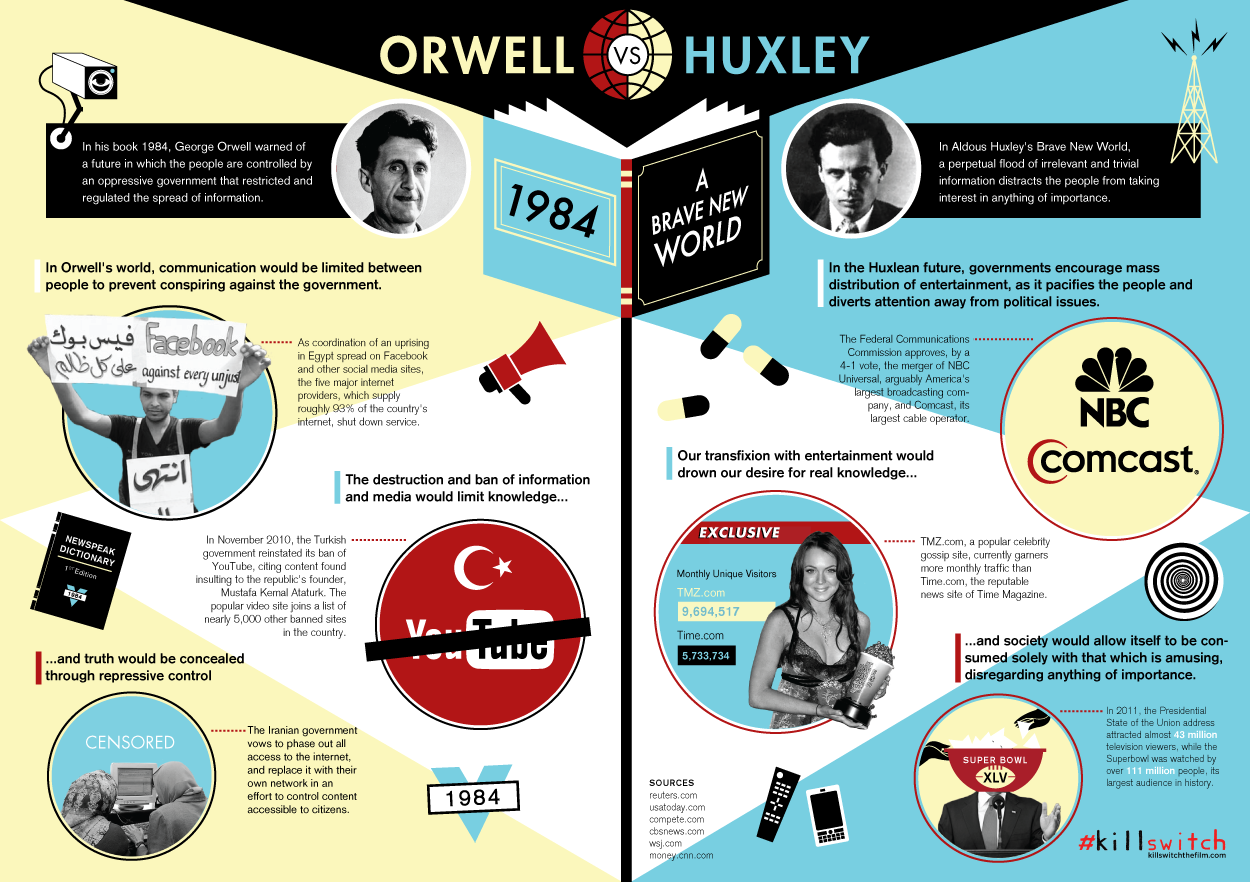
I think it's because I was never as into sci-fi as many of my friends were that I never got as into Ray Bradbury as those same friends. In my years of a more intense kind of dystopia-fanboyism, I always felt compelled to shrug at anyone who put Fahrenheit 451 in the same league with 1984 and Brave New World. It was good, but somehow lacked the thorough societal examination that I thought the others had done so well; or just one man's cranky, if accurate, rant against television--part of a tech-suspicious philosophy he held on to to the last. As that part of my life faded--and as I started to recognize that Asimov was probably the most accurate predictor of the future (Huxley took silver in that race, Orwell the bronze)--I still thought of Bradbury's opus as an also-ran.
But one of his short stories has managed to stick with me for several years. Because it's a short story and because it's relatively easy to find and because you were probably forced to read it in high school, too, I won't recount the details of A Sound of Thunder, which doesn't have the weight of Fahrenheit, but remains lodged in my brain much more tightly. Not for the dinosaur-hunting (though that alone might have done it), but for his simplifying of the concept of time travel and alternate timelines, a topic that many writers often seem to want to make as complicated and unapproachable as possible. That simple, almost reductive, embrace of the complex that usually turned me off to his work (while endearing millions of people more reasonable than I), actually served to draw me in and direct me to the heart of the idea: the interconnectedness of all things and the humor, tragedy, romance and horror that are part and parcel with that connection. And though the ending of A Sound of Thunder was probably more of a funny idea to him than a warning to us, it contained an important tie-in with his philosophy about life being "too serious to take seriously:" it's probably not worth the analysis we're inevitably going to give it.
But one of his short stories has managed to stick with me for several years. Because it's a short story and because it's relatively easy to find and because you were probably forced to read it in high school, too, I won't recount the details of A Sound of Thunder, which doesn't have the weight of Fahrenheit, but remains lodged in my brain much more tightly. Not for the dinosaur-hunting (though that alone might have done it), but for his simplifying of the concept of time travel and alternate timelines, a topic that many writers often seem to want to make as complicated and unapproachable as possible. That simple, almost reductive, embrace of the complex that usually turned me off to his work (while endearing millions of people more reasonable than I), actually served to draw me in and direct me to the heart of the idea: the interconnectedness of all things and the humor, tragedy, romance and horror that are part and parcel with that connection. And though the ending of A Sound of Thunder was probably more of a funny idea to him than a warning to us, it contained an important tie-in with his philosophy about life being "too serious to take seriously:" it's probably not worth the analysis we're inevitably going to give it.
Wednesday, June 6, 2012
Yeah, I'm a Little Excited

This weekend, Prometheus will take some sting out of the waiting for The Dark Knight Rises. But it won't do anything for the fact that the summer's main event is still a little over six weeks away. And there are posters and banners everywhere. And the new TV ads already running. And the sizzler reel shown at the MTV Movie Awards (which WB has already asked several sites to take down, so I won't link here) that was just... beautiful. I didn't think anything would top this trailer. And for sheer foreboding, it probably didn't, even if it did give us a hint of a gorgeous new Hans Zimmer score, which tells me we'll be getting plenty of stomach punches. But it did add dashes of humor and action for those not so into heady films, and also demonstrating that this movie is going to be packed. We've seen loads of footage and still know so little about what's going on. How is all this going to fit in one movie?
That's where the reveal of the run time come in--a staggering 2 hours and 45 minutes, which is at least 15 minutes longer than I thought WB would allow. But, then, I'd watch a six-hour Batman movie, so I might not have my thumb on the pulse of the mainstream here. And now the news that tickets will go on sale on Monday, so I'll have my ticket in less than a week's time and I'll have to keep that thing pristine for about 46 days (no, I will not wait until opening day to get my ticket--like some loser). And I will look at that ticket every single day, perhaps occasionally caressing it gingerly, waiting for it to either let me see TDKR on July 20th or make me Batman, whichever comes first.
One day at a time...
*Along with the news that WB/DC may actually be moving ahead on that Justice League movie. We already knew TDKR was the end of this series, of course, but the more I hear about the future of these movies, the more I think about the implications of that. And as I do, I'm less inclined than I was six or seven months ago to shrug off the idea that anything is possible. Well done, Nolan.
Tuesday, June 5, 2012
CNN, Tone-Deaf
So as my time-off wound to a close, I happened to catch this story on CNN. You can watch it yourself, but a quick summation: Harvard MBA grad Joe Mihalic racks up $90,000 in student debt and pays it off in about seven months. Impressive by most any standard.
But.
The thing about getting into a Harvard master's program is that someone who does is likely to have relatively significant means in the first place. And even someone who had to take advantage of every scholarship they could find under every rock they could hoist is likely to come out of it with advantages that students from non-Ivy's don't usually have. Mihalic says on his site that he "started a job with a modest income (relative to my banking and consulting peers) in the tech industry of Austin." You may have noticed the use of "relative" there. Mihalic admits to spending $1,300/month on "entertainment" before he got his act together. He bought a house, furniture for the house, two cars, and a motorcycle. His worries were that he wouldn't be able to start a family, or a business, or acquire a business and turn it around. This was two years out of school. Mihalic may have had a lot of student debt (more than the average student), but anyone who thinks he had anything else in common with the average student is fooling themselves.
In the nation of Horatio Alger there's always someone eager to intentionally miss the point of any argument and change the discussion by playing the "stop belittling the successful" card. But this is not about Mihalic. Sure, he had means and resources most students could only dream of, but he responsibly put them to good use (eventually) and dragged himself out of the debt he acquired. I truly mean when I say: good for him.
No, this is about CNN and it's pre-commercial break teaser about "learning a lesson or two" from Mihalic (and following up with a pithy "good lesson for us all" at the end of the interview--who is "us all" and how do I join them?). Just a day or so before launching their hours-long Jubilee flogging (hosted by outdated British caricature Richard Quest and possible accessory to illegal phone-hacking Piers Morgan), CNN's midday programming deigned to tell soon-to-be and recent graduates that all they need to do is buckle down and acquire the resources of a Joe Mihalic. No wait, they couldn't even be that honest. Instead, they set up an insulting chart with five recommendations for reducing debt, based on Mihalic's plan:
Young people aren't watching anyway, right? Yeah, fuck 'em.
But.
The thing about getting into a Harvard master's program is that someone who does is likely to have relatively significant means in the first place. And even someone who had to take advantage of every scholarship they could find under every rock they could hoist is likely to come out of it with advantages that students from non-Ivy's don't usually have. Mihalic says on his site that he "started a job with a modest income (relative to my banking and consulting peers) in the tech industry of Austin." You may have noticed the use of "relative" there. Mihalic admits to spending $1,300/month on "entertainment" before he got his act together. He bought a house, furniture for the house, two cars, and a motorcycle. His worries were that he wouldn't be able to start a family, or a business, or acquire a business and turn it around. This was two years out of school. Mihalic may have had a lot of student debt (more than the average student), but anyone who thinks he had anything else in common with the average student is fooling themselves.
In the nation of Horatio Alger there's always someone eager to intentionally miss the point of any argument and change the discussion by playing the "stop belittling the successful" card. But this is not about Mihalic. Sure, he had means and resources most students could only dream of, but he responsibly put them to good use (eventually) and dragged himself out of the debt he acquired. I truly mean when I say: good for him.
No, this is about CNN and it's pre-commercial break teaser about "learning a lesson or two" from Mihalic (and following up with a pithy "good lesson for us all" at the end of the interview--who is "us all" and how do I join them?). Just a day or so before launching their hours-long Jubilee flogging (hosted by outdated British caricature Richard Quest and possible accessory to illegal phone-hacking Piers Morgan), CNN's midday programming deigned to tell soon-to-be and recent graduates that all they need to do is buckle down and acquire the resources of a Joe Mihalic. No wait, they couldn't even be that honest. Instead, they set up an insulting chart with five recommendations for reducing debt, based on Mihalic's plan:
- Got a roommate (I may be out of touch, but isn't this standard for most college and post-college students?)
- Didn't go out to eat (one I admittedly don't follow as much as I should, but given how much Mihalic says he was doing this after grad school, I have to imagine that he racked up more significant food bills than most)
- Took a second job (sure, right after I nab that first job)
- Sold unnecessary items (can I keep one of my cars and my motorcycle?)
- Planned free dates (see the thing about going out to eat)
Young people aren't watching anyway, right? Yeah, fuck 'em.
Subscribe to:
Posts (Atom)